
Circumcision Enthusiast Ghostwrote Defense of Own Book in Major Magazine, Emails Suggest
New documents shed light on a media shell game orchestrated by a small network of advocates.
On March 1, 2012, the pro-circumcision advocate Daniel Halperin co-authored Tinderbox, a book on the history of the HIV epidemic in Africa. Roughly a tenth of it was spent discussing the potential benefits of circumcision as a public health intervention against the disease. Later that month, a group of anti-circumcision activists, known as “intactivists,” took to the book’s Amazon page and left a string of negative reviews. Many of them critiqued the authors’ representation and analysis of the then-recent research connecting circumcision with lower rates of HIV acquisition. Notably, while many of the book’s one-star reviews focused on the circumcision portion of his book, not all of them did. Nevertheless, Halperin reportedly noted that immediately after the viral attack began in late March, the sales ranking of the book on Amazon plummeted.
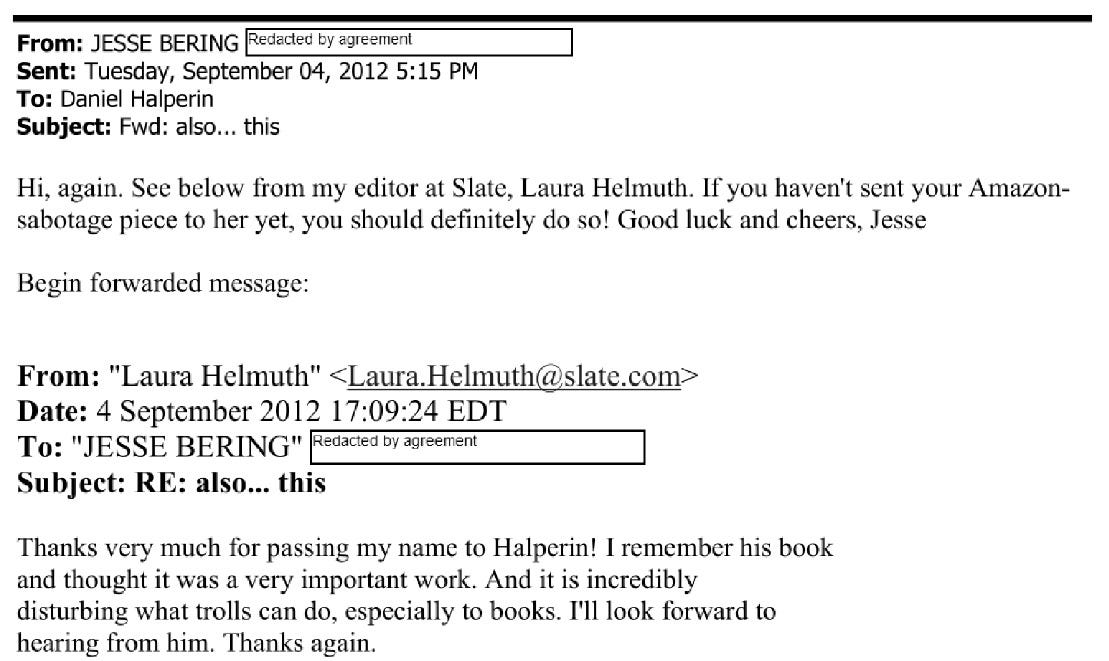
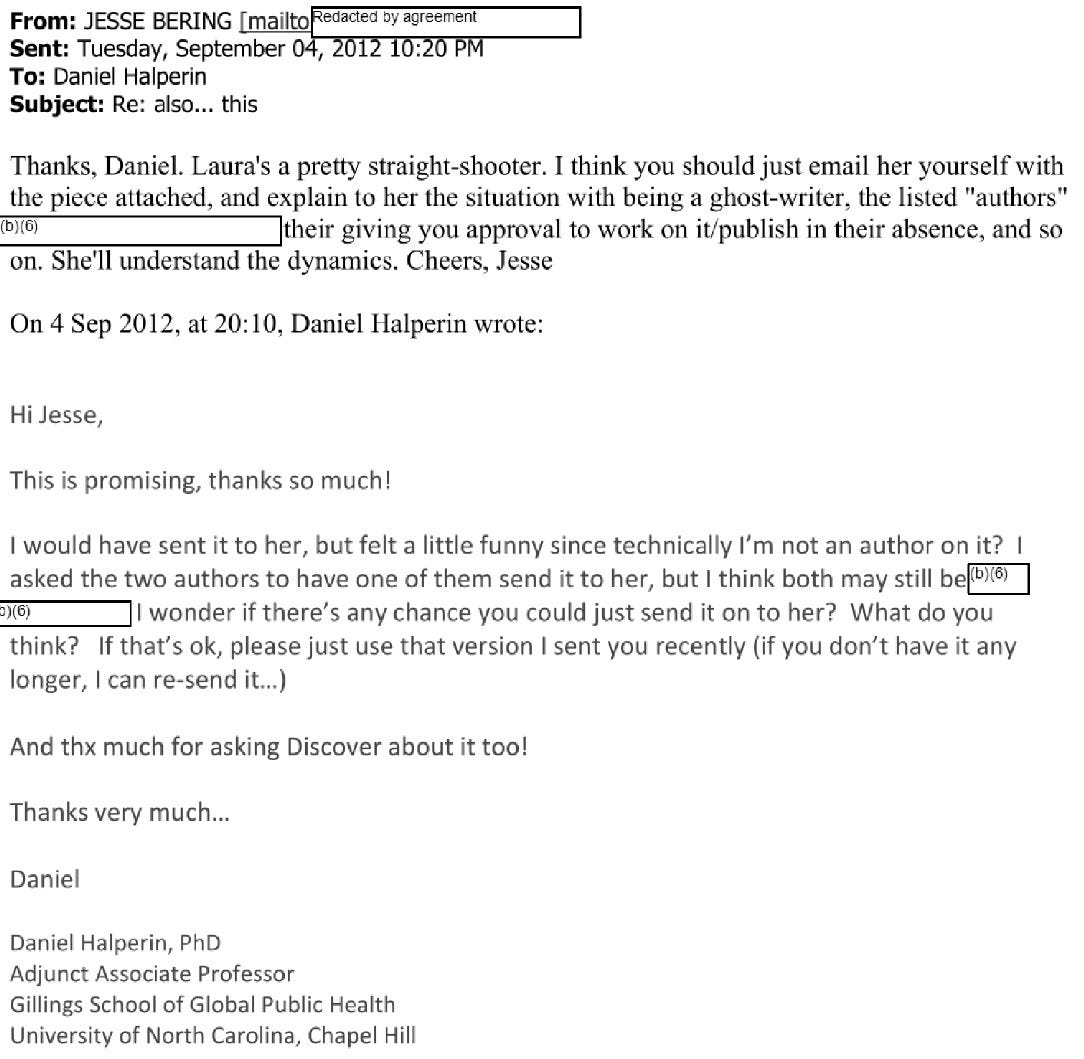
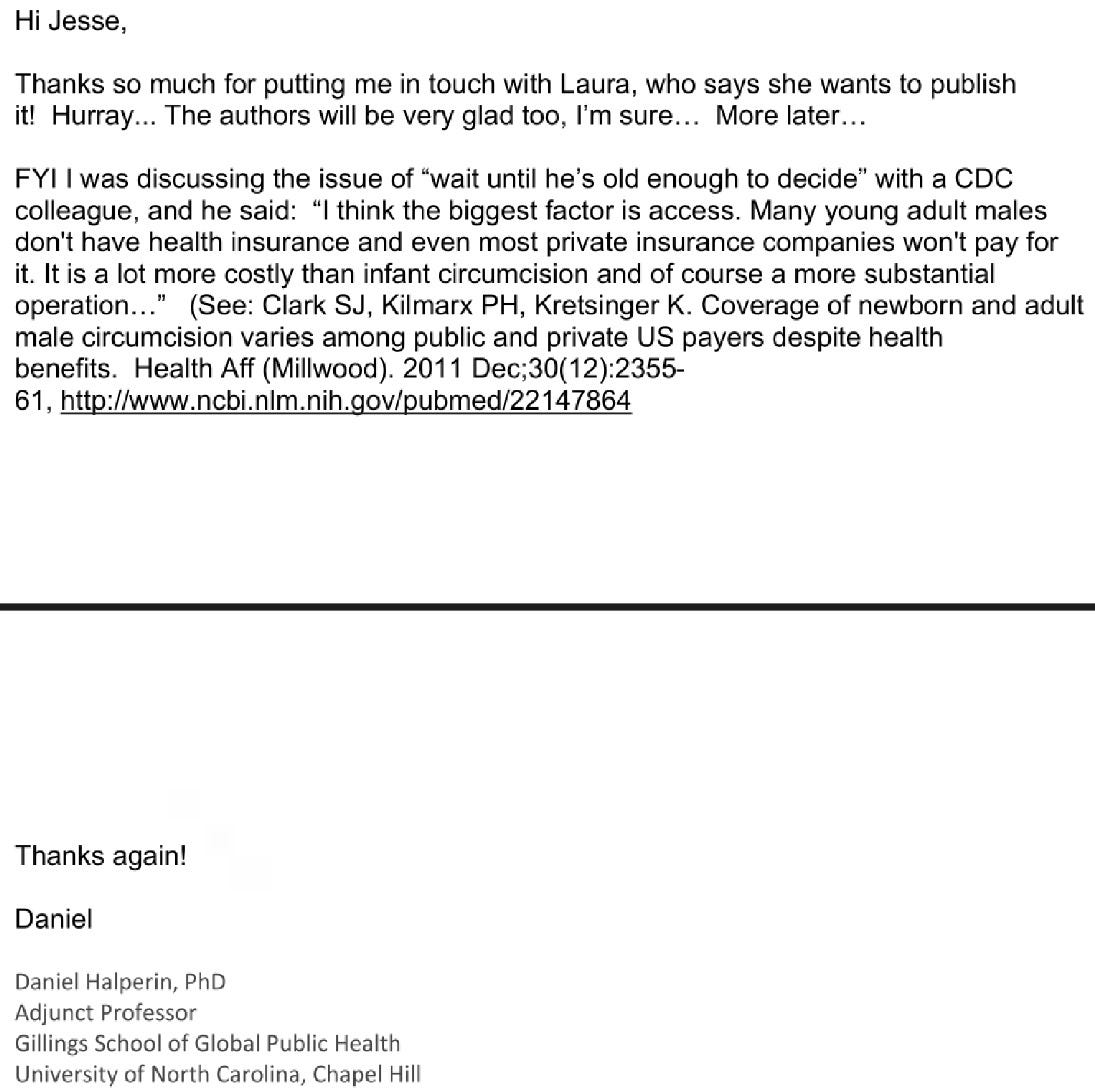
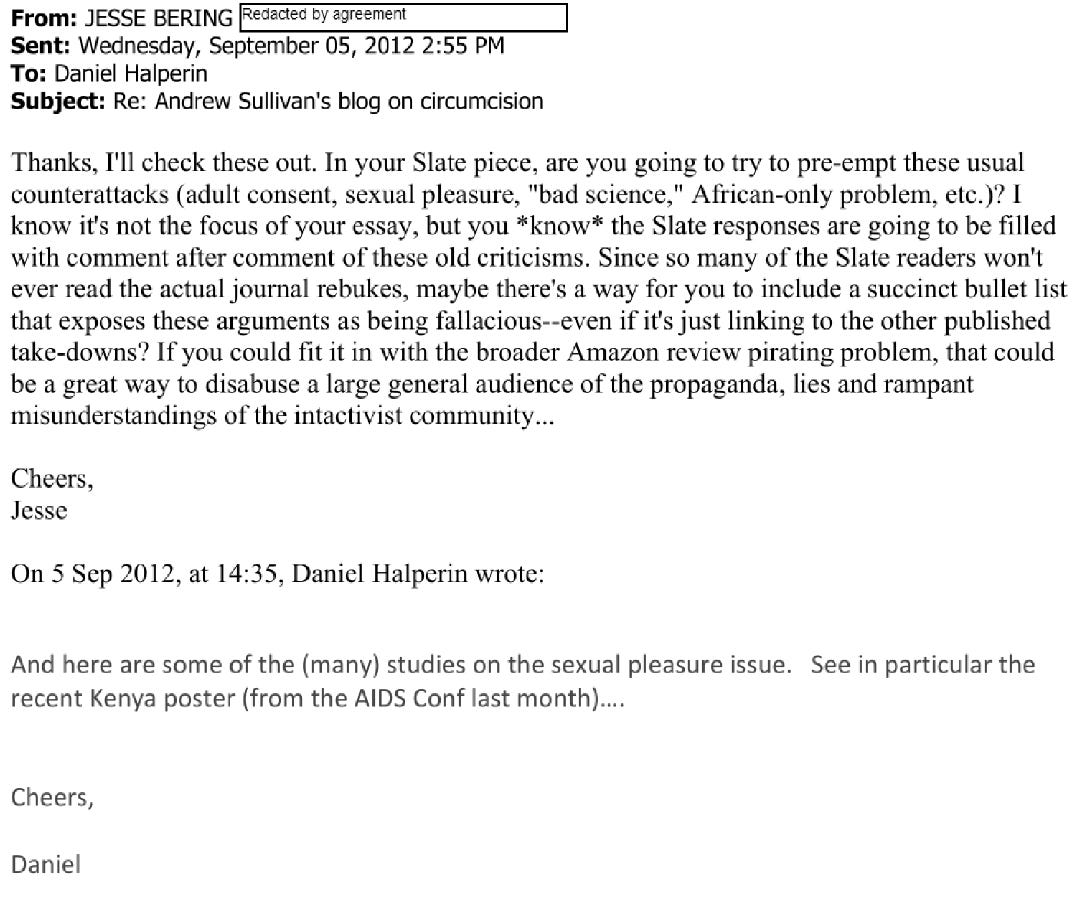
In response, it appears he submitted a rather scathing article to Slate Magazine that was published under a different name. Halperin’s associate, Jesse Bering, having recently been scorned by a Daily Beast piece by Andrew Sullivan on circumcision, sympathized with Halperin’s situation and told him to send the article to his editor at Slate. Bering suggested that Halperin “explain to her the situation with being a ghost-writer,” assuring him that “she’ll understand the dynamics.” Bering hoped the article would “disabuse a large general audience of the propaganda, lies and rampant misunderstandings of the intactivist community.” In the end, the Slate editor accepted the piece.
The final article overstated the benefits of circumcision, suggesting it “reduces the risk of HIV infection by about 70 percent,” while the most commonly reported figure is 60 percent. It also broadly panned the anti-circumcision community, characterizing the Amazon reviews as “a vicious game of character assassination by conspiracy theorists” and an “anti-science campaign.” It also equated anti-circumcision activists with anti-vaccine activists, without drawing any specific link between the two. It demeaned them with labels like “passionate extremist group,” “fake peer reviewers,” and “conspiracy theorists.”
An incident like this raises questions about authenticity and conflicts of interest in the spaces where media, scientific debate, and the public’s interest converge. These emails highlight the mechanics of orchestrating public perception on a particular issue, in this case, medicalized male circumcision. It also raises questions about the pliability of major media outlets in potentially allowing an author to ghostwrite an article defending his own book, where he pretends to interview himself.
Pro-circumcision advocates often invoke the notions of consensus and scientific authority when promoting the practice around the world, but the very existence of large numbers of dissidents, professional or otherwise, undermines the legitimacy of these claims of uniformity. This likely motivates them to so often “otherize” their detractors with such disempowering labels. This appears to be a tactic meant to avoid grappling with the substance of their critiques, which threaten to seriously undermine the public’s acceptance of infant circumcision as a health intervention.
The purported author of the article is Joya Banerjee, a public health expert whose only article published by Slate is this one. She has co-authored numerous pro-circumcision academic articles, alongside Halperin and other such noteworthy advocates as Brian Morris and Jeffrey Klausner.
The emails
Emails released via a Freedom of Information Act request are below.
The source file is available at Zenodo.