Out nowNon-fiction
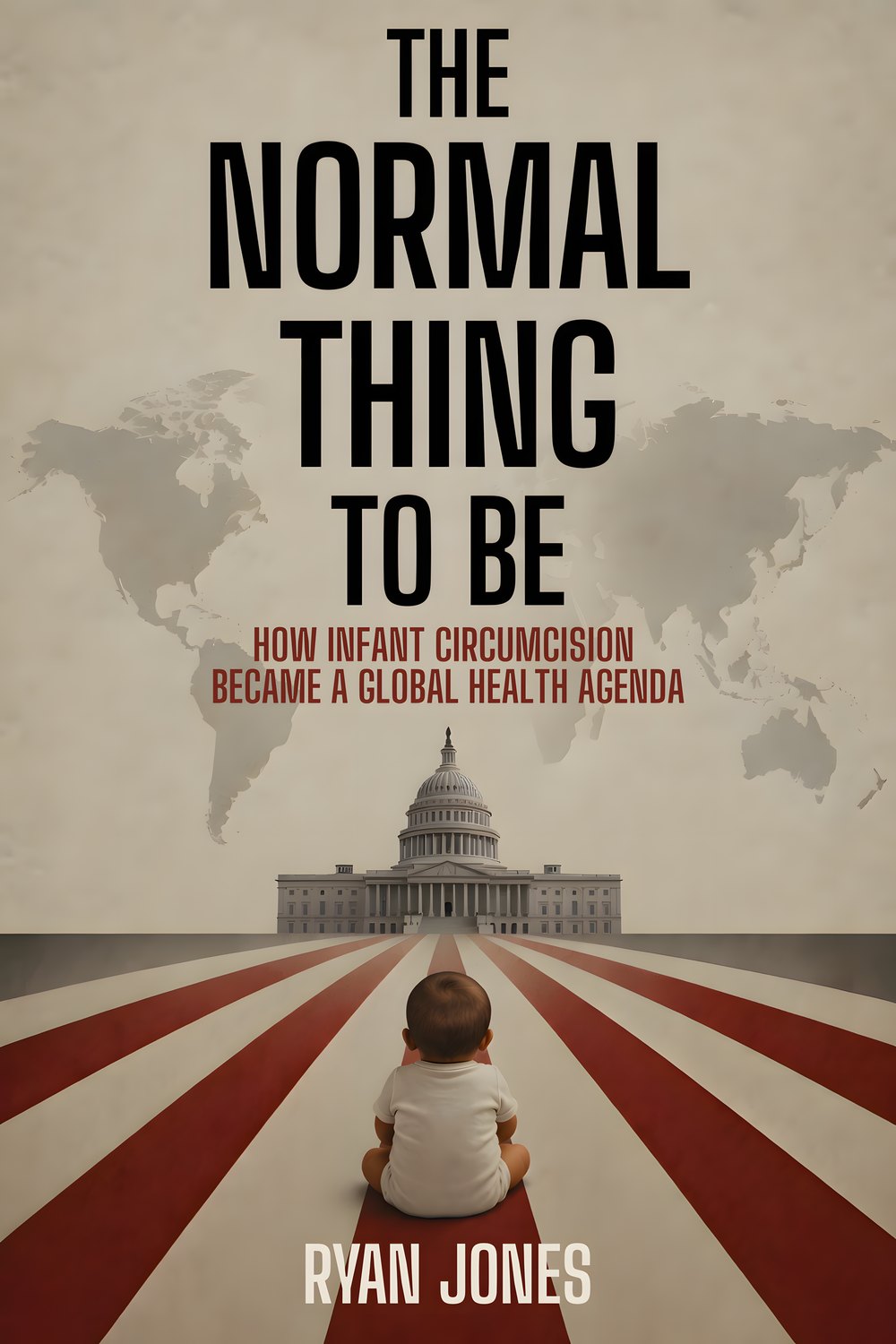
The Normal Thing to Be
How Infant Circumcision Became a Global Health Agenda
How a controversial American custom became a global health initiative, and who made it happen.
Buy the book
- Published
- June 2026
- Pages
- 266
- Formats
- Paperback, Ebook
Routine infant circumcision is one of the few surgeries performed on people who cannot consent, for reasons that keep changing. In the early 2000s, three trials in sub-Saharan Africa appeared to show it could reduce men's risk of acquiring HIV. The World Health Organization endorsed the findings, and what followed was an unprecedented effort to circumcise millions of males across more than a dozen African countries. The CDC and the American Academy of Pediatrics followed, reversing years of institutional skepticism.
These policy shifts did not unfold organically. A small network of circumcision advocates held key positions inside the WHO, CDC, NIH, and a handful of prestigious universities, and the public record shows them coordinating in ways the official account does not reflect. This book draws on new interviews, Freedom of Information requests, and documents that have received little scrutiny.
Few topics in pediatrics have produced as much sustained argument among physicians, ethicists, and parents. The practice is promoted on medical grounds that are widely disputed and sustained by a normative impulse that has little to do with medicine at all.
At its core the controversy is an ethical one. Circumcision permanently alters a person’s sexual anatomy without medical necessity, which is the usual standard for operating on someone who cannot consent. In virtually any other medical context, the routine surgical removal of healthy tissue from a non-consenting patient would invite immediate ethical and legal scrutiny. Circumcision occupies a unique place in American medical culture, an exception so deeply embedded that many practitioners and parents do not think of it as one at all.
That status is starting to erode. Critical coverage has appeared in major outlets. Tens of thousands of circumcised men are actively pursuing methods to undo what was done to them as newborns. In several European countries, legislative proposals and court rulings have sought to ban the practice on minors. The institutions that championed it are beginning to feel the pressure.
Every year, millions of parents are asked to consent to an irreversible genital surgery for their newborn sons. For many it is an unsettling proposition. This book explains how it came to be, which is a story that has stayed largely out of public view.
Inside the book
The American Default. How a practice with no clear medical rationale became the status quo.
Stacking the Room. The committees, the invitations, and who ended up in them.
Scientific Warriors. The researchers who built the evidence base, and stifled the dissent.
Into the Field. What the mass circumcision programs looked like on the ground.
The Old World Pushes Back. European courts, medical bodies, and the limits of the consensus.
The Ethics, The Law, and The Unraveling. Where the argument stands now, and why the consensus is coming apart.
From the Prologue
My first real encounter with this topic happened in the early 2010s while traveling in the Republic of Georgia. Infant circumcision is virtually unheard of there. One night, over drinks in the capital city of Tbilisi, a group of teachers and I, none of whom were American, were spending the evening with a few Georgian friends. At one point, the conversation drifted into more personal territory, and a Georgian woman brought up the fact that she had dated an American teacher the year before and found it strange that he was missing a part of his anatomy.
As the only American in the group, I explained what circumcision was and that it was something done pretty routinely in the States. I was surprised by the look of shock on the faces around me. They hadn't known this about the U.S. Their next question was inevitably "why?" and in my sudden realization that I had no answer, I was stunned. The only thing I could think to say, It's supposed to be cleaner that way, embarrassed me to my core as I realized, for the first time, how silly that was.